Deportation from Al-Dhalea Stirs Fears of Widening Regionalism and Its Impact on Confronting the Houthis
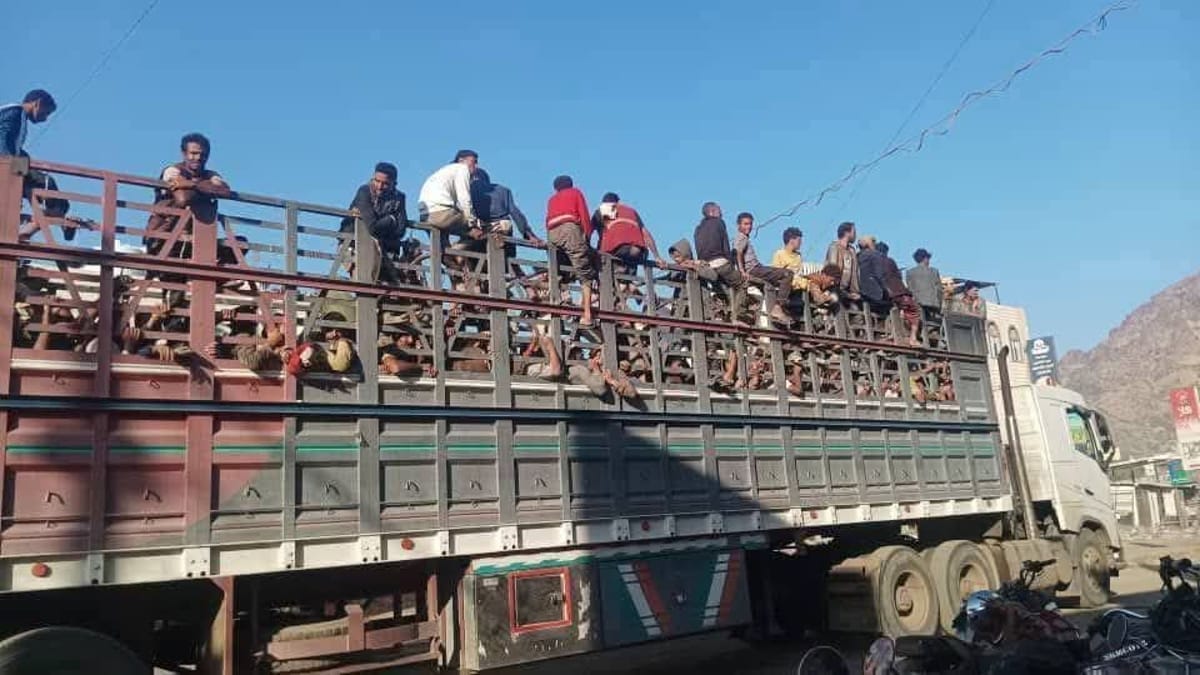
The expulsion of citizens from northern governorates from the Al-Dhalea governorate, based on their personal IDs, has sparked a wave of condemnation and criticism in Yemen, amid warnings of the repercussions of regional discrimination on citizens' rights, the social fabric, and its potential impact on the confrontation with the Houthi group.
Criticism has escalated over what activists and writers described as forced deportation and discriminatory measures against citizens and workers. They warned that restricting Yemenis based on their regional origins could exacerbate internal divisions and give the Houthis an opportunity to exploit these practices for mobilization and to weaken the anti-Houthi front, at a time when the country is witnessing military escalation, coinciding with the renewed Houthi siege on Taiz.
Activists accused followers of the dissolved Transitional Council of entrenching regional discrimination, stressing the need to distinguish between legitimate security measures and practices based on geographical identity. They affirmed that protecting security should not be a pretext for depriving citizens of their rights to movement and work, or for treating them collectively based on their regions.
Measures That Serve the Houthis
Journalist Fathi bin Lazraq stated that harassing any Yemeni citizen because of their affiliation with a specific governorate, or expelling workers under the pretext of security precautions and accusing them of working for the Houthis, is "a behavior rejected in its entirety." He considered these measures suspicious in their timing and content, and that they serve the interests of the Houthis by giving them a new pretext for mobilization.
Bin Lazraq added that a worker struggling to provide for his children, who is then displaced from his job without committing any violation or condemned act, cannot be expected to respond with a friendly attitude. He called on governors, security directors, and officials to protect all citizens and guarantee their rights to movement and work, while simultaneously tightening security measures and taking necessary precautions to protect everyone.
For his part, writer and journalist Ghamdan Al-Youssefi described the deportation of hundreds of citizens from their areas in Al-Dhalea as a "stab in the back," considering that this act cannot be justified given the country's current circumstances.
Al-Youssefi pointed out that the support provided by many people from Aden and other governorates to Taiz was appreciated by its people, adding that what happened in Al-Dhalea cannot be justified or met with silence.
Accusations of Sowing Confusion and Weakening the Anti-Houthi Front
Activist Waseem Saad Quzeil opined that the expulsion of people from the northern governorates from Al-Dhalea at this time does not seem, in his estimation, to be a spontaneous move. Instead, he considered it a premeditated measure by parties he said are seeking to sow confusion and weaken the anti-Houthi front.
Quzeil described the practices he spoke of as an expression of racism and regionalism, warning of their repercussions on the cohesion of anti-Houthi forces.
In turn, lawyer and human rights activist Khaled Al-Ansi accused what he described as "remnants of the Transitional militias" in Al-Dhalea of practicing regional discrimination against the people of Taiz and deporting them to areas under Houthi control.
Al-Ansi said that these measures, in his view, repeat previous practices, considering their purpose to be pushing the deportees to join the Houthi ranks. He also held the dissolved Transitional militias responsible for what he considered support for the Houthis through these and other actions.
Reception of Deportees Opens Door to Political Debate
In the same context, activist Ali Al-Nassi said that about three thousand workers from the northern governorates were deported from Al-Dhalea, as he reported, under the pretext that they were sleeper cells or that they had violated labor regulations and worked for themselves.
Al-Nassi added that the workers were transported on trucks in a manner he described as humiliating, and that the Sana'a government exploited the incident, as he put it, as its appointed governor in Al-Dhalea came to receive them, providing them with water and food after they were deprived of them during their roundup and deportation. Buses were also provided to transport them to their families' homes in the northern governorates.
Al-Nassi noted that Sana'a-affiliated media documented the incident and quoted it as saying that the media presented the deportees not as people from the south or Al-Dhalea, but as tools of Saudi Arabia and the Chairman of the Presidential Leadership Council, Rashad Al-Alimi, with the aim of stirring up sedition between the north and the south.
Al-Nassi considered that these developments serve the interests of the Houthis, warning against the political and media exploitation of the incident in a way that deepens the division among the Yemeni people.
For his part, activist Mubarak Al-Bihani believed that the deportation of people from the northern governorates from Al-Dhalea serves the Houthis, and considered that what he described as collusion between the Houthis and the dissolved Southern Transitional Council is still ongoing.
Al-Bihani questioned who benefits from the deportation of people from the northern governorates, considering that the humiliating treatment of the deportees might lead to them being used to support the fronts where the Houthis are fighting.
Accusations Against Saudi Arabia of Encouraging Division
In another stance, Abdullah Al-Sharif accused forces he described as separatist and Saudi-backed of deporting workers from northern governorates, especially Taiz and Ibb, from the governorates of Aden and Al-Dhalea.
Al-Sharif described these practices as a "racist and regionalist crime," holding the Saudi regime responsible for what he said was encouraging these forces to entrench fragmentation and division among the people of one nation.
Source: Almahriah Net