The Arabian Peninsula is Incomplete Without Yemen
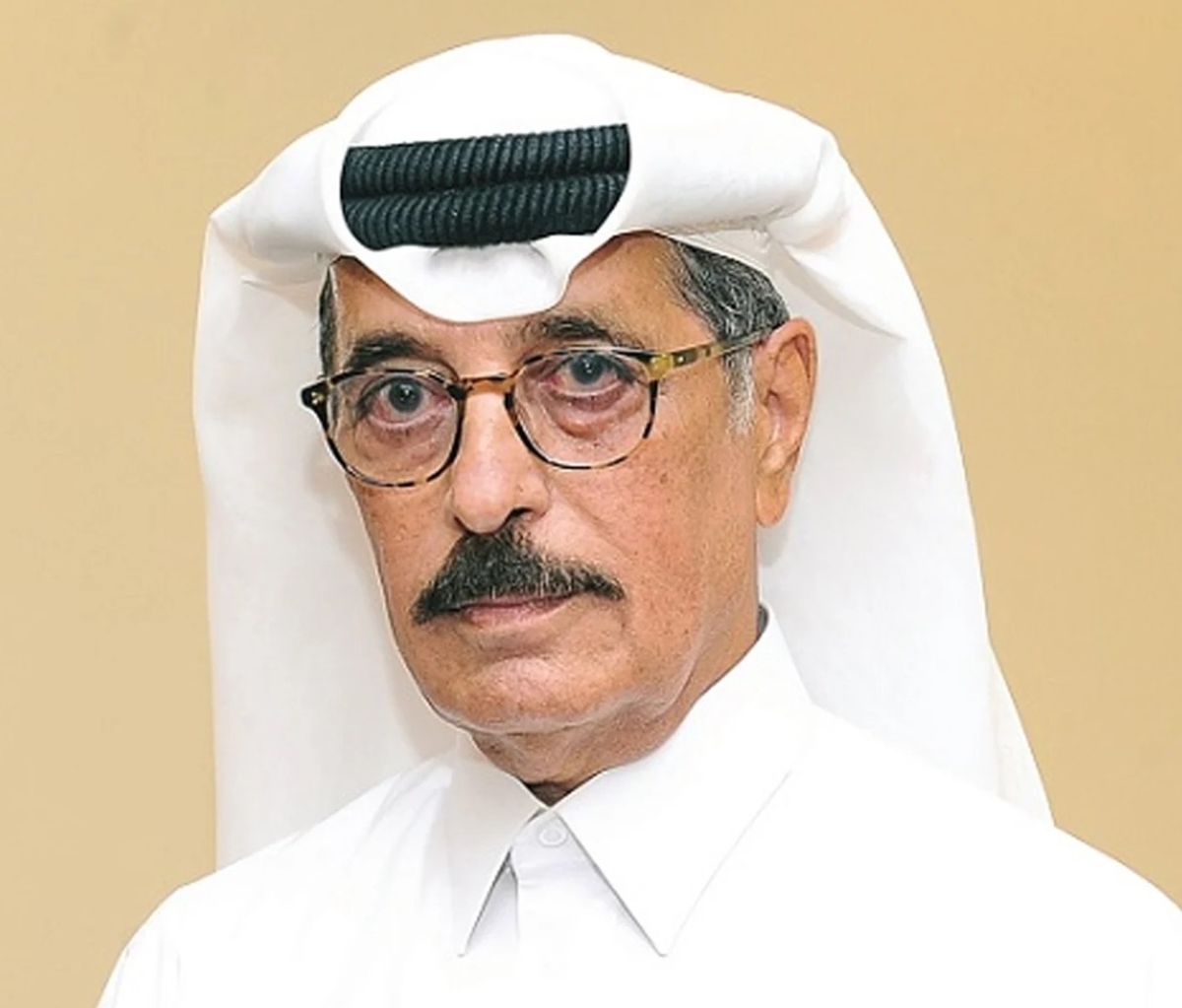
Dr. Hamad bin Abdulaziz Al-Kawari
Yemen needs no one to find its place in history. Its status is affirmed in the Quran's mention of Sheba ('a good land') and the Prophet's Hadith ('wisdom is...
Yemen does not need someone to find its place in history; its place was established by the Holy Quran when it spoke of Sheba and God's blessings upon it: "a good land and a forgiving Lord," and by the noble Prophetic Hadith: "Faith is Yemeni and wisdom is Yemeni." Between the "good land" and "Yemeni wisdom" extends the history of a country that cannot be marginalized after reading the history of the Arabs and Islam.
Sheba, Marib, and Himyar are not names from a distant memory, but rather testaments to an ancient civilization, a land that knew urbanization, agriculture, and trade. Yemen's presence in Islam was not fleeting or late; its tribes came to the Messenger of God ﷺ and its people embraced Islam. The Prophet ﷺ sent Mu'adh ibn Jabal to Yemen as a teacher and a judge. From Yemen, men and tribes emerged, carrying Islam and the Arabic language with them to other lands, contributing to the conquests and the building of the Arab and Islamic societies that followed. Yemen remained present in its scholarly, commercial, and cultural centers, from Sana'a and Zabid to Hadhramaut and Aden.
My generation knew Yemen through history, then through politics. Since our youth, we followed the transition from monarchy to republic, the Egyptian intervention to support the new republican regime, and the subsequent events that made Yemen a strong presence on the Arab stage. We would hear the names of its men and read about its conflicts and transformations, before circumstances allowed me to know Yemen up close and to meet many of its men.
The turning point in my direct relationship with Yemen was in 1994, during the attempt to separate the South from the North. At that time, I was the Minister of Information in the State of Qatar, and Qatar had a clear stance in support of Yemen's unity, while other Gulf positions differed. The media was one of the battlegrounds of that political confrontation, until the war ended with unity prevailing.
During that phase, and before and after it, I had the opportunity to know and work with a number of prominent Yemeni figures from various positions and affiliations. I knew Hassan Al-Lawzi, who was the Minister of Information; Jarallah Omar, who was the Minister of Culture; Sheikh Abdullah bin Hussein al-Ahmar; President Ali Nasser Mohammed, with whom my relationship began in Damascus; Mohsen Al-Aini, one of the most prominent Yemeni figures, whom I knew as a fellow ambassador in Washington and our relationship continued until his death; Mohammed Salem Basindawa, whom I knew as a fellow ambassador at the United Nations before he became Prime Minister; and Dr. Abdulkarim Al-Eryani, among many others. May God have mercy on those who have passed away and grant long life to the living.
President Ali Abdullah Saleh invited me to visit Yemen, and I got to know him personally, and a friendly relationship developed between us. On one occasion, he told me he had decided to award me the highest Yemeni medal but would postpone its presentation until my next visit to ensure my return to Yemen. Days passed, circumstances changed, the world turned, and the president passed away, leaving the medal where it was. Perhaps this little story holds a piece of the story of politics itself: we postpone some things for tomorrow, and then tomorrow comes, different from what we had imagined.
My knowledge of Yemen was not limited to politics and its men. I knew some of its great creators, foremost among them Abdullah Al-Baradouni and Abdulaziz Al-Maqaleh, and I invited them to participate in our cultural events. During this visit, the presidency arranged a literary and artistic session attended by a number of writers and artists, which remains in my memory for how it reflected the richness of Yemeni literature and art. In a spontaneous moment, the Minister of Culture and I exchanged attire; I dressed him in the Arab Agal, and he dressed me in the Yemeni turban and dagger (jambiya). A small picture, but it spoke more about the closeness between us that day than many words could.
As for the Yemen we saw, that is another story..
In Sana'a, I saw an architectural art I know no parallel to; a city whose houses look as if they came out of an ancient book and remained alive, inhabited by people. In Ibb and its surroundings, I saw nature that description fails to do justice to. We ascended winding roads between the mountains, and I saw Yemeni peasant women climbing the highlands, watering the fields and picking fruits, until we reached a lunch held on a mountaintop surrounded by scenes almost out of a fantasy. At the city entrance, its notables welcomed us in their diverse traditional clothes, in a scene of color, dignity, and beauty. Then came the Yemeni table, no less rich than the place itself.
I say this having roamed the world, east and west: in Yemen, there is a natural diversity rarely found together in one place; beautiful beaches, plains and valleys, mountains clad in green, fertile agricultural land, and a rare architectural heritage. Whoever sees all this asks in pain: How could so much politics and conflict do all this to a country that God granted so much beauty?
Wars and politics have long besieged Yemen, their noise almost obscuring its reality and greatness. The country of civilization, history, people, and beauty was reduced to news of conflict, and the real Yemen disappeared behind its crises.
But Yemen's importance does not stop at history, beauty, and people. Geography has given it a location that neither Yemenis, their neighbors, nor the world can ignore. It is in the south of the Arabian Peninsula and overlooks the Bab-el-Mandeb, one of the most important maritime passages connecting the Indian Ocean to the Red Sea, and from there to the Suez Canal and the Mediterranean Sea. The events of recent years have confirmed once again that turmoil in Yemen does not remain within its borders, and that the security of the Red Sea, navigation, and international trade are affected by what happens there.
Therefore, ignoring Yemen does not harm Yemen alone. Whoever leaves the south of the Arabian Peninsula in turmoil cannot be assured of the stability of the rest of it.
The experiences of past decades have taught us that temporary solutions, which come in response to a development here or a crisis there, do not work for Yemen. An emergency measure might halt a round of conflict, but it does not prevent the causes of the conflict from producing another round. Unless there is a comprehensive vision that addresses state-building, unity, economy, and development, and restores the Yemeni people's confidence in their future, we will remain stuck in a cycle of crisis management instead of escaping it.
Furthermore, the expansion of internal problems and divisions opens the door to foreign interventions. Here, a frank word must be said to the people of Yemen themselves: Yemen's future is not made by others, and the primary responsibility remains with the Yemenis; to prioritize Yemen above all else, to free themselves from reliance on and ties to any foreign power, and to place their national unity above their differences. Reliance on the outside is a recipe for illness, not a cure; it uses you as long as it has a need for you, and when its need is met, its interest in you wanes, leaving the homeland alone to pay the price. The requirement is not for Yemenis to differ less, but rather not to turn their differences into gateways for the interests of others to pass through. National unity does not abolish diversity, but rather protects it and protects Yemen with it.
On the other hand, Yemen's neighborhood bears a responsibility of no less importance. We should not look at Yemen as a burden to be borne or a security problem to be contained. Yemen, if it stabilizes and properly invests its potential, is a great asset to the Arabian Peninsula: with its human wealth, location, land, economic, agricultural, and tourism potential, and its history and civilization. The danger is not in Yemen itself, but in leaving it to poverty, division, turmoil, and foreign interventions.
Among the countries of the region, the Kingdom of Saudi Arabia remains the most connected to Yemen geographically and historically, the central state in the Gulf Cooperation Council, and Yemen's stability is part of its stability, its security part of its security. The Kingdom has given much to Yemen, but I look forward to this role taking on a further strategic dimension; not limited to dealing with crises as they arise, but leading, in partnership with the Yemenis and the region's countries, a long-term project that supports Yemen's unity and stability, helps in its development and institution-building, and prepares it for gradual integration into its natural environment in the Arabian Peninsula.
And if we look to the Kingdom of Saudi Arabia to stand by Yemen and lead it towards stability and integration, it is also its right to find appreciation from the Yemenis for this, and for an extended hand to be met with an extended hand, and trust with trust.
The time has come for us to think about Yemen with the logic of the future, not the logic of crisis.
Why should Yemen, if it regains its stability and its state consolidates, remain outside the Gulf Cooperation Council system? And why should the strategic horizon not be to prepare it one day to become a full part of this system? Then, it would not be merely adding a country to an existing council, but a step towards a framework more expressive of the region's geography and its unified interests.
A day may come when we ask: If Yemen becomes part of this system, would not the "Cooperation Council for the States of the Arabian Peninsula" be a name more truly expressive of its new reality?
This is not an emotional call, nor a dream that ignores the difficulties of reality. It is a vision based on a lesson repeated by events: Yemen is a great asset if embraced, stabilized, and becomes an active part of its surroundings, and a grave danger to all if neglected and left prey to division, poverty, and foreign intervention.
For a long time, we have been asking what we can do for Yemen. Perhaps it is time to pose the question differently: What can we do with Yemen for the future of the entire Arabian Peninsula?
For Yemen was never a margin in its history, and it should not remain a margin in its future.
المصدر: From Asharq newspaper