Attack on Ma'ashiq Palace in Aden and Bombing of Marib: Are They Linked to Houthi Frontline Losses?

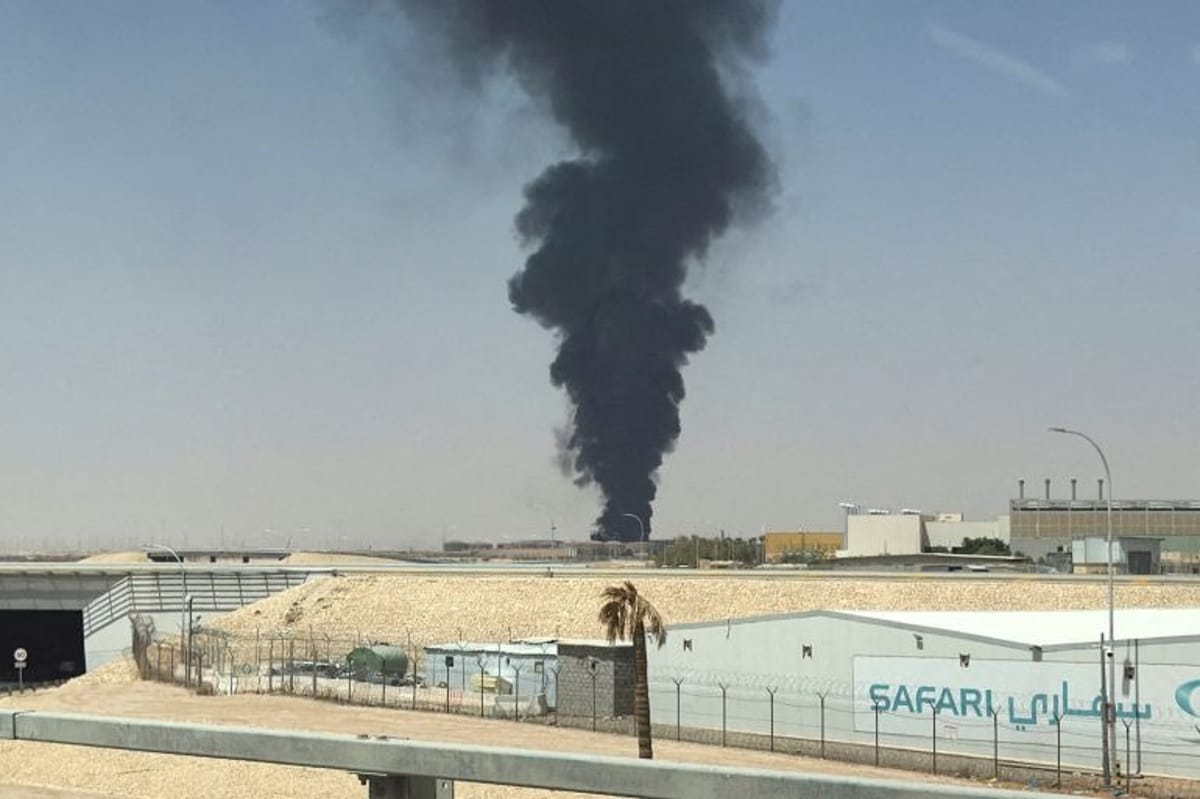
Houthi missile attacks targeting the temporary capital Aden and the city of Marib on Thursday evening widened the circle of escalation in Yemen, placing the Yemeni government headquarters and residential neighborhoods in the line of fire, coinciding with the ongoing 'Fajr al-Yemen' (Yemen's Dawn) operation and confrontations on several fronts. While the government affirmed it would continue its work from Aden, officials, political figures, and media personalities linked the attacks to military losses they said the Houthis are incurring, while other interpretations offered a different explanation for the timing of the attack on Ma'ashiq Palace.
The attack targeting the presidential complex in Ma'ashiq resulted in the death of five people and the injury of 16 others, according to the Minister of Health in the Yemeni government, who clarified that the victims were workers at the site, including guards and civilian employees. In Marib, the governorate's media office said the Houthis shelled residential neighborhoods with nine ballistic missiles and seven other projectiles.
The Yemeni government confirmed it would continue its work from the temporary capital, Aden, and its efforts to confront the Houthi group, following the attack on Ma'ashiq Palace, calling on the international community to take a stance against the attacks targeting state institutions and civilians.
The Chairman of the Presidential Leadership Council, Rashad al-Alimi, stated that the attack on Ma'ashiq Palace represents, in his words, an extension of the pattern of attacking airports and oil facilities in Yemen and Saudi Arabia. He emphasized that the 'Fajr al-Yemen' operation is proceeding to achieve its declared objectives, foremost among them the restoration of state institutions and the extension of its authority over the entire national territory, all the way to Sana'a.
An attempt to boost Houthi morale on the frontlines
For his part, Yemen's ambassador to Britain, Yassin Saeed Numan, linked the missile attacks on Aden to military developments on the battlefronts, considering them an attempt to boost the morale of Houthi fighters who he said are facing pressure around Taiz and the Bilad al-Subaihi areas.
Numan said that the shelling of Aden, its neighborhoods, and its suburbs with this number of Iranian ballistic and hypersonic missiles comes, in his estimation, as an attempt to raise the collapsing morale of the group's fighters.
He accused the Houthis of using Iranian missiles and drones to target cities, villages, homes, and civilian state institutions, considering that resorting to these attacks reflects a state of confusion in the face of military losses.
Numan recalled Aden's experience in confronting the group during the early stages of the war, saying that what he described as savagery in targeting civilians hides, in his view, a state of weakness in the face of the ground confrontation.
What is the connection between the attacks and military losses?
In the same context, the Undersecretary of the Ministry of Information, Abdulbasit al-Qa'idi, considered the Houthis' resort to targeting civilians in Aden, Marib, and Taiz as an indication of the magnitude of the blows the group is receiving.
Al-Qa'idi said that these strikes have, in his estimation, hit command and control centers and missile platforms in Sana'a, Sa'ada, Dhamar, and other areas, in addition to the killing of dozens of field commanders and hundreds of elements on various fronts.
For his part, Dr. Salem Al-Arada linked the missile attacks to what he described as the dwindling options for the group and its accumulating losses, considering that directing missiles towards Saudi Arabia, Aden, and Marib will not change the balance of the confrontation.
Al-Arada stated that targeting civilians does not prove strength but rather, in his opinion, reveals an inability to achieve objectives, stressing that Marib and Aden will not submit to these attacks.
As for journalist Ali al-Uqbi, he described the shelling that targeted residential neighborhoods in Marib and the temporary capital Aden as evidence of the magnitude of the losses he said the Houthis are incurring against the armed forces and popular resistance.
In a similar reading, Rashid Ma'ili, director of the Al-Mahra Media Center, said that targeting civilians in Aden, Marib, and Taiz reflects, in his estimation, the extent of the blows the group has suffered since the launch of the 'Fajr al-Yemen' operation.
Ma'ili pointed to what he described as the destruction of command and control centers and missile platforms in several areas, and the killing of dozens of field commanders and thousands of elements on the frontlines, adding that targeting cities and civilian objects will not, in his view, change the ability of Yemenis to confront the Houthis.
In turn, journalist Kamal al-Salami said that the missile shelling on Aden and Marib is linked, in his estimation, to what he described as the Houthis' military failure in Taiz and the losses they incurred without achieving a tangible breakthrough on the fronts surrounding the city.
A different reading of the timing of the Ma'ashiq attack
In contrast to the interpretations linking the attacks to military losses, Saudi journalist Dawood Al-Shirian proposed a different reading of the timing of the attack on Ma'ashiq Palace.
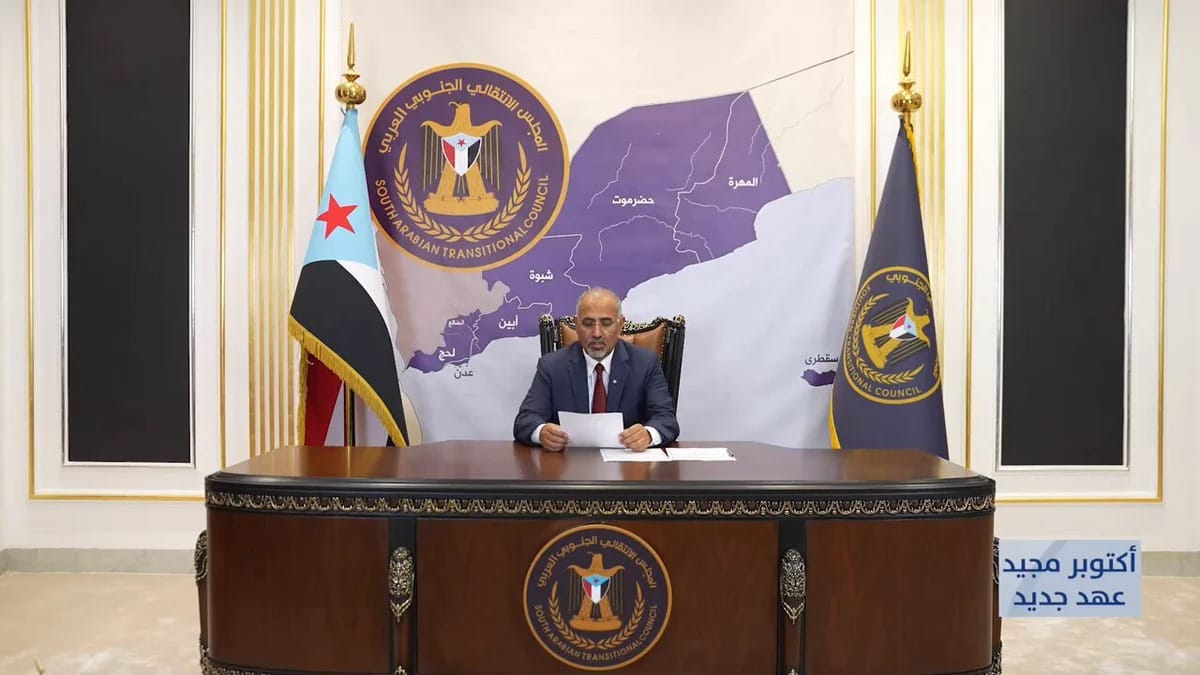
Al-Shirian said that the targeting of the palace, which houses the Yemeni government headquarters in Aden, came after the appearance of Aidarous al-Zubaidi, president of the dissolved Southern Transitional Council, and his call for mobilization in the south.
He added that the temporal proximity between the two events raises questions, but does not prove coordination between the two parties.
This proposition differs from the readings presented by Yemeni officials and media figures, as it focuses on the political synchronicity between the targeting of the government headquarters and the appearance of al-Zubaidi, without definitively asserting a connection between the two events or providing evidence of possible coordination.
Call for General Mobilization
On the religious front, the scholars and preachers participating in the annual advocacy forum organized by the 'Tawasul with Yemen Scholars' program in Aden issued a statement calling for a response to the general mobilization announced by the Chairman of the Presidential Leadership Council, Rashad al-Alimi, and stressed the unity of ranks and alignment behind the political leadership.
The statement, issued concurrently with the Houthi shelling of Aden and Marib, said that the participants affirm the obligation to respond to the call for general mobilization, calling for confronting the Houthis through what it described as 'jihad' with words and statements, and participation on the fronts and in military sites.
Source: Al-Mahriah Net - Open Sources