Is Saudi Arabia Preparing to Change the Rules of Engagement with the Houthis?
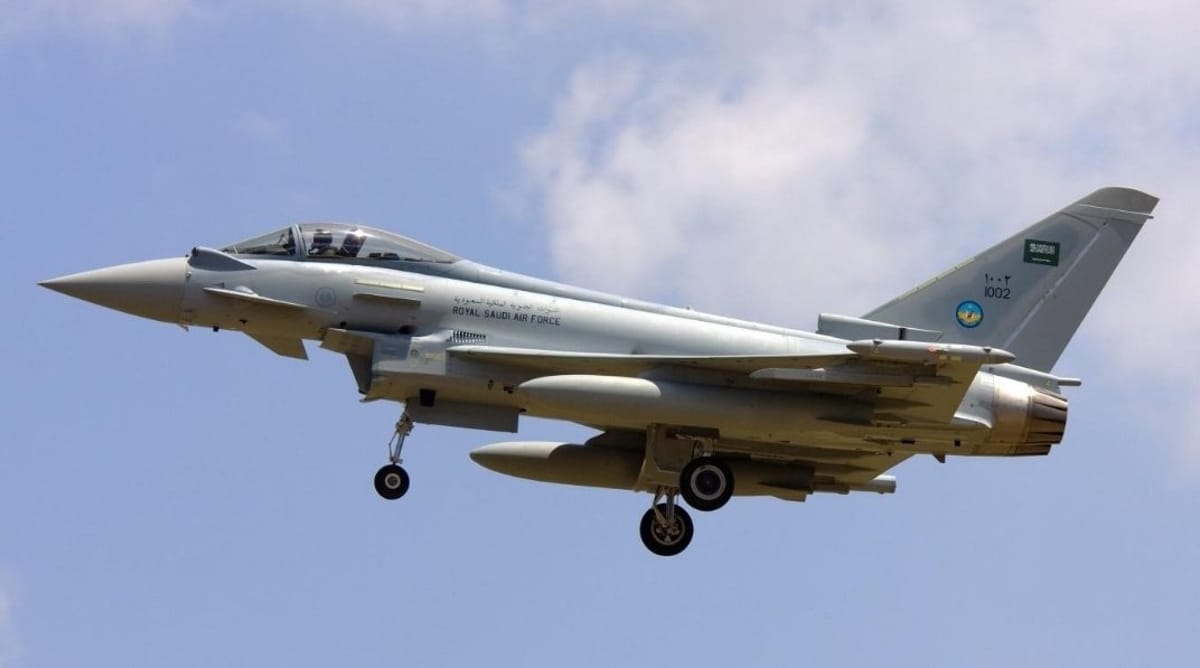
The recent Houthi attacks on Saudi territory are no longer just a new round of military escalation, but seem to be a direct test of the red lines drawn by Riyadh in recent years, especially as the targeting shifts to vital facilities, cities, and economic installations.
The large-scale Houthi attack, in which the group used dozens of ballistic missiles and drones to target the cities of Abha, Khamis Mushait, Jizan, and Najran, resulted in 73 civilian injuries, according to Saudi Arabia. This, along with damage to oil and vital facilities belonging to Aramco, has forcefully brought the Saudi-Houthi confrontation back to the forefront.
This comes at a time when the Yemeni arena is witnessing increasing escalation, especially as military operations approach strategically important areas on the western coast and Bab al-Mandab, making the Houthi threat to Riyadh extend beyond the Yemeni borders to the Kingdom's security, its economic interests, and the security of navigation and energy in the region.
More Assertive Saudi Messages
In the aftermath of the attacks, Saudi statements became clearer in outlining the features of the next phase.
The Saudi-led coalition has vowed to take "all necessary operational measures" to respond to the Houthi attacks. The coalition's spokesman, Major General Turki Al-Maliki, described the escalation as "dangerous," stressing that the joint forces will confront what he called the "hostile approach" of the Houthis and will work to neutralize threat sources and protect the Kingdom and its national assets.
This coincided with a statement from the Saudi Council of Ministers, which affirmed that the Kingdom is proceeding in defending its sovereignty, the security of its citizens and residents, and safeguarding its national assets, while rejecting what it described as the hostile approach of the Houthis.
These positions, collectively, indicate a shift in Saudi discourse from focusing on containing the escalation to emphasizing readiness to take more decisive military action if the group continues to target the Saudi heartland and vital facilities.
This possibility is reinforced by information reported by CNN from a source familiar with Saudi directives, stating that Riyadh plans to respond to the Houthi attacks and has informed its allies.
According to the source, Saudi diplomats informed American lawmakers in August about the collapse of political channels with the Houthis and warned of the group's plans to escalate against the Kingdom, at a time when Riyadh was seeking Washington's support to confront the threat.
These moves reveal that Saudi Arabia does not view the Houthi escalation as a separate military issue but is dealing with it as part of a broader political and diplomatic effort aimed at building a regional and international support network for any steps it may take later.
The Threat Is No Longer Just Yemeni
The recent attacks gain additional importance due to the nature of the targets the Houthis are now striking.
The repeated targeting of oil facilities and Saudi cities places energy security at the heart of the confrontation, especially since any major disruption in Saudi oil production or exports would have repercussions extending beyond the Kingdom to global energy markets.
In this context, Saudi political analyst Ahmed Al-Shehri said that Saudi Arabia "will respond to the Houthi attacks in a painful and severe manner," considering that targeting the Kingdom affects not only the Saudi economy but also the economies of the Gulf states and the global economy, which is linked to Saudi oil supplies.
On the other hand, the statement by Pakistan's Minister of Defense regarding his country's readiness to support Saudi Arabia if it comes under attack from Yemen carries an additional implication that Riyadh is seeking to expand the political and security support umbrella around it in its confrontation with the Houthis.
Reorganizing the Yemeni Domestic Front
However, the most significant development in Saudi strategy may not be the scale of the strikes Riyadh could carry out, but rather how it rebuilds the anti-Houthi Yemeni side.
Over the past period, there have been indications of Saudi efforts to reorganize government forces and unify military decision-making centers, after years of division and disparity among Yemeni forces and factions.
Military expert Dr. Mohammed Al-Maqabaleh believes that Saudi Arabia is adopting a long-term strategy in Yemen based on reorganizing and unifying government forces and increasing their military readiness to confront the Houthis.
In a statement to the "Al-Tasi'a" program on "Al-Mahriah" channel, Al-Maqabaleh says that Riyadh has worked to overcome the state of disparity that existed among some Yemeni fronts, which he believes was linked to different regional parties. He noted that unifying forces and fronts under a single operational command and decision requires time, preparation, and coordination, and cannot be achieved immediately.
According to Al-Maqabaleh, Saudi Arabia has also worked to raise the readiness level of Yemeni forces and introduce modern military technologies, including drones, reflecting a trend towards building more effective Yemeni capabilities on the ground.
Dr. Musa Allayeh, a professor of peacebuilding and conflict studies at the Doha Institute, reaches a similar conclusion. He believes that Riyadh has been working for some time to reorganize and unify the fronts and government forces to form a more coordinated military force capable of confronting the Houthis.
In a statement to "Al-Mahriah" channel, Allayeh says that overcoming the disparity among Yemeni forces requires a long process, especially after years of multiple centers of influence and military decision-making. He considers what is happening to reflect a long-term Saudi strategy rather than a move linked to a single military round.
In recent years, Saudi Arabia has tried to de-escalate direct confrontation with the Houthis and open political tracks to reach a settlement that would end the war and reduce its security and economic costs.
However, the group's continued development of its missile and drone capabilities, along with the expansion of its operations, presents Riyadh with a different equation.
The more the Houthis' ability to reach the Saudi heartland and target vital facilities increases, the narrower the range of options becomes for the Kingdom, caught between continuing its policy of containment or shifting to a policy of direct deterrence.
Al-Maqabaleh believes that continuing to give the Houthis time to develop their military capabilities and conduct various maneuvers and movements will make the group more dangerous and increase the difficulty of changing the existing equation.
Hence, the potential Saudi move does not seem to be limited to carrying out retaliatory military strikes, but may be directed towards weakening the Houthis' offensive capabilities, increasing the readiness of government forces, reunifying the fronts, and imposing a new military equation.
In conclusion, observers and analysts believe that the Saudi move goes beyond responding to the recent Houthi attacks and is aimed at reshaping the military equation in Yemen in the long term. According to this view, Riyadh seeks to build a more unified and organized Yemeni army, providing it with the necessary weapons and specific capabilities, including aviation and drones, to be able to wage a decisive confrontation with the Houthi group.
In parallel, it appears that Saudi Arabia is working to expand the regional framework of the confrontation by building defense and security partnerships with countries like Pakistan and Turkey. This would provide political and military support for the Yemeni army and enhance its ability to regain control over Houthi-held areas.
Analysts believe that the combination of rebuilding a unified Yemeni army, providing it with the necessary military capabilities, and forming a supportive regional umbrella could outline a new Saudi strategy. Its goal is not just to contain the Houthi threat, but to eliminate the group's ability to threaten Yemen and neighboring countries, and to impose a different military and political equation on the ground.
Source: Almahriah Net